
Role-Specific Account Intelligence with Salesforce and Vertex AI
- Status
- Completed
- Confidentiality
- Anonymized. Anonymized professional case study. All records, summaries, identifiers, and diagrams are synthetic. I've withheld proprietary schemas and prompts.
Built a security-aware asynchronous integration that generated source-attributed summaries while avoiding unchanged repeat model calls.
I designed and implemented an Apex integration that assembled accessible context from more than 12 generalized Salesforce data categories, fingerprinted the payload with SHA-256, and called Gemini through Vertex AI only when the source changed. It produced separate source-attributed summaries for Sales, Support, and Finance while keeping credentials and model settings outside source code.
- Type
- Professional
- Categories
- AI & Machine Learning
- Software & Automation
- Data & Dashboards
- Technologies
- Salesforce
- Apex
- SOQL
- Vertex AI
- Gemini API
- SHA-256
- REST APIs
Context
Sales, support, and finance users who need role-specific context from distributed account records.
- Private object and field names, prompts, records, endpoints, credentials, and production summaries cannot be published.
- Salesforce governor limits and callout rules required asynchronous execution.
- Generated summaries support human review and cannot replace authoritative records.
Problem
Relevant account context was spread across numerous records, while each department needed a different grounded view and external model calls had to respect platform, access-control, configuration, and sensitive-data constraints.
My contribution
I implemented the access-aware aggregation, structured payload, deterministic change detection, asynchronous callout, response handling, role-specific summary updates, completion notification, and sensitive-data-aware diagnostics. I also applied source-attribution and output constraints and externalized credentials and model settings.
Approach
Check field-level access, assemble a deterministic JSON snapshot, compare its SHA-256 fingerprint with prior state, skip unchanged requests, call Vertex AI through governed Salesforce configuration, store bounded role-specific outputs, and notify the initiating user.
Artifacts
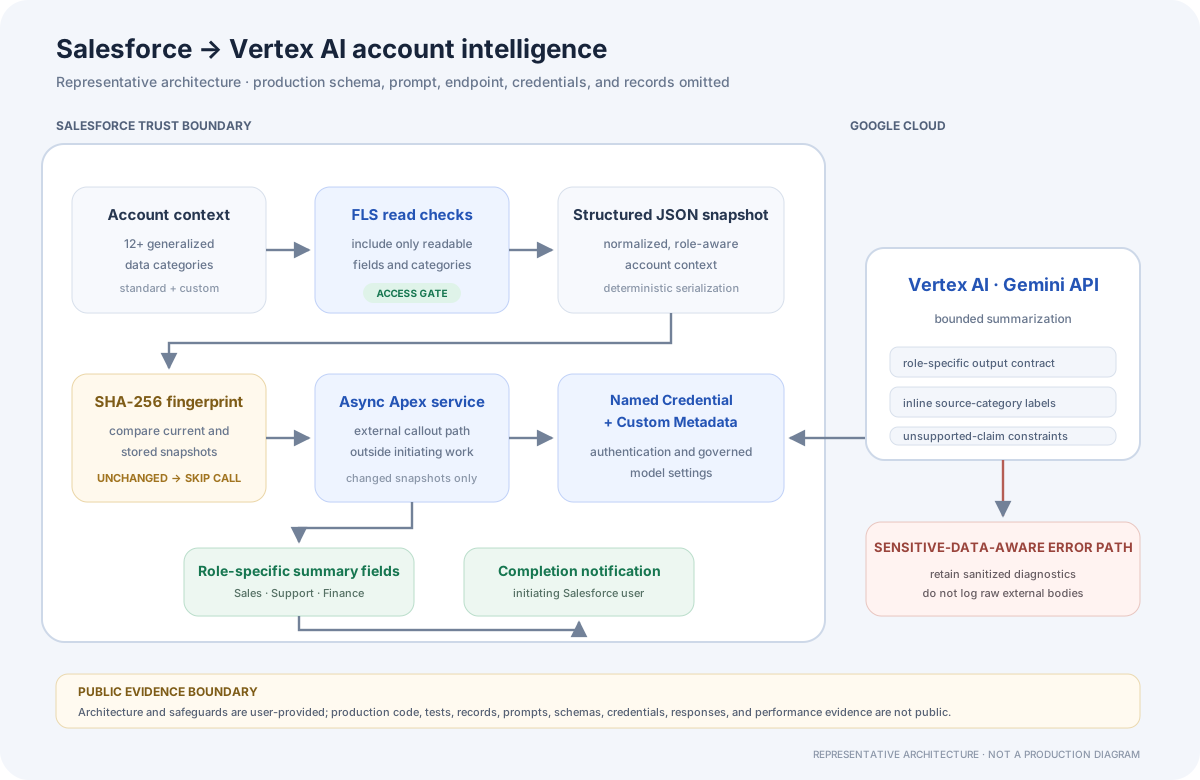
Account-intelligence architecture (Diagram) Representative visual using synthetic data Open full-size visual: Account-intelligence architecture 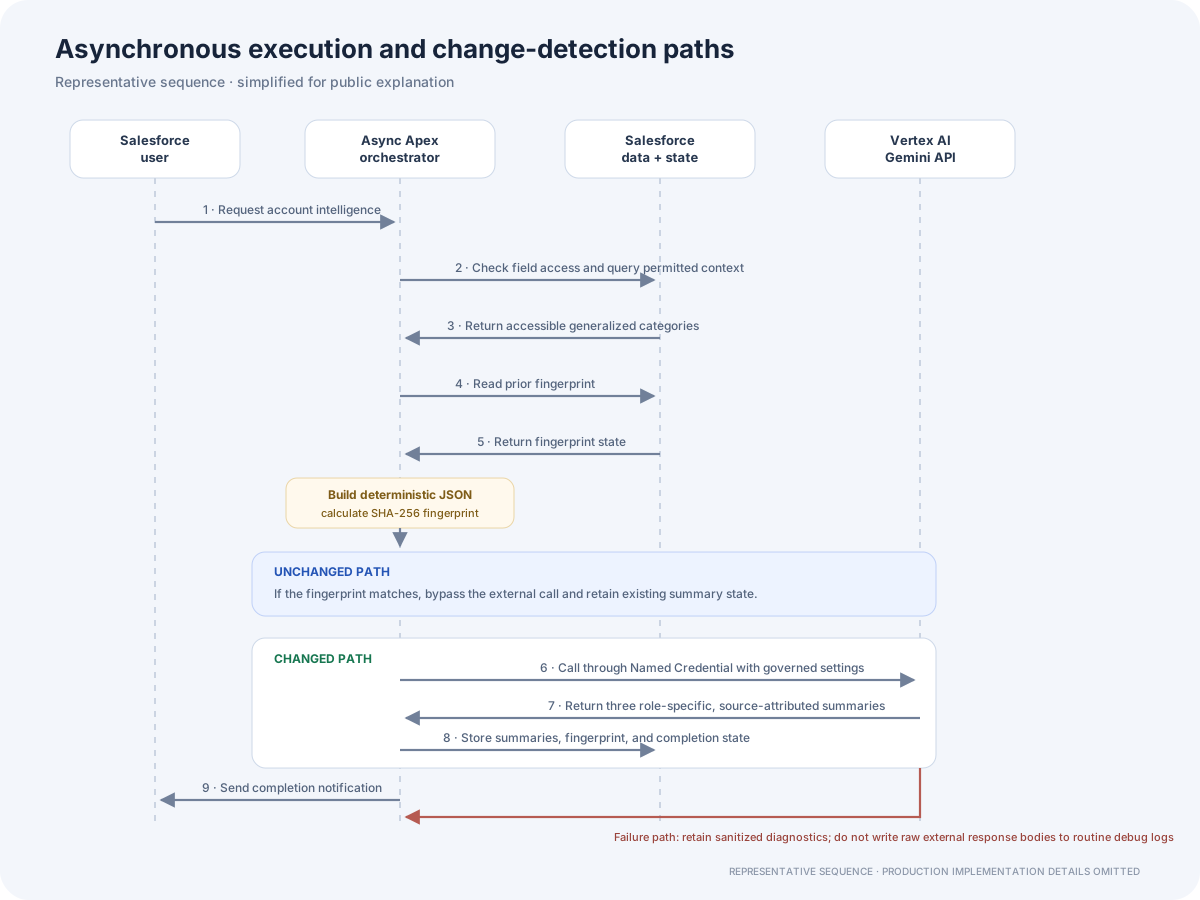
Asynchronous processing sequence (Diagram) Representative visual using synthetic data Open full-size visual: Asynchronous processing sequence
Data artifacts
- Open data artifact: Synthetic account snapshot (JSON) Synthetic data
- Open data artifact: Representative role summaries (JSON) Synthetic data
Outcomes
- Produced separate Sales, Support, and Finance summary paths.
- Used deterministic payload hashing to bypass unchanged repeat calls.
- Kept authentication and model configuration outside Apex source.
Limitations and current status
- Source code, test classes, callout mocks, logs, model evaluations, and deployment evidence weren't available for independent review.
- I make no claims about accuracy, latency, reliability, cost savings, adoption, or formal compliance certification.